Why Rental-Car Coverage Leaves Gaps
You rent cars regularly—business trips, vacations, or filling gaps between owned vehicles—and every rental counter asks if you want their insurance. You decline because your credit card offers collision coverage, or you assume the rental agency's policy covers you. Neither assumption is complete. The rental agency's policy protects their vehicle and their liability exposure, not yours. Your credit card's collision waiver is secondary coverage that pays only after any other policy you carry, and it never includes liability for injuries or property damage you cause to others.
A non-owner car insurance policy is primary liability coverage that follows you into any vehicle you drive but do not own. For frequent renters, it closes the liability gap the rental agency and credit card leave open. It covers bodily injury and property damage you cause while driving the rental. It does not cover physical damage to the rental car itself—collision and comprehensive coverage require an owned vehicle to insure, and a non-owner policy insures no vehicle.
Get non-owner SR-22 coverage without owning a vehicle
Compare carriers that offer non-owner policies with SR-22 filing — required for reinstatement in most states.
Get Your Free QuoteNational Non-Owner Writers
17 carriers
Geico, Progressive, The General, Dairyland, and GAINSCO write non-owner policies in all or most states. USAA writes non-owner coverage in all 51 jurisdictions but restricts eligibility to military-affiliated drivers. State Farm writes non-owner in only 1 of 51 jurisdictions—never assume availability.
Verified carrier state-filing data, 2026
What a Non-Owner Policy Covers in a Rental
A non-owner policy carries the same liability structure as a standard auto policy: bodily-injury liability per person, bodily-injury liability per accident, and property-damage liability. State minimum liability limits range from $15,000 per person to $50,000, with $25,000 the most common floor. Your non-owner policy must meet or exceed your state's minimum. Most carriers allow you to buy higher limits—$100,000/$300,000/$100,000 is a common upgrade—and higher limits cost more but protect your assets if you cause a serious accident.
The policy also typically includes uninsured-motorist coverage, which pays your medical bills and lost wages if the other driver has no insurance or insufficient coverage. Twenty-two states require uninsured-motorist coverage on every liability policy. If you rent in a state that requires it, your non-owner policy must carry it.
The policy does not include collision or comprehensive coverage. Those coverages pay to repair or replace a vehicle you own. A non-owner policy insures no owned vehicle, so there is nothing to repair. If you damage the rental car, your non-owner policy pays nothing toward the rental agency's repair bill. The rental agency will bill you directly, or your credit card's collision waiver will pay if you charged the rental to that card and declined the agency's damage waiver.
The rental agency's policy covers their vehicle. Your non-owner policy covers your liability to others. Neither covers the rental car's physical damage—that gap is what the agency's collision-damage waiver fills.
How Non-Owner Coverage Layers with Rental-Agency and Credit-Card Protection
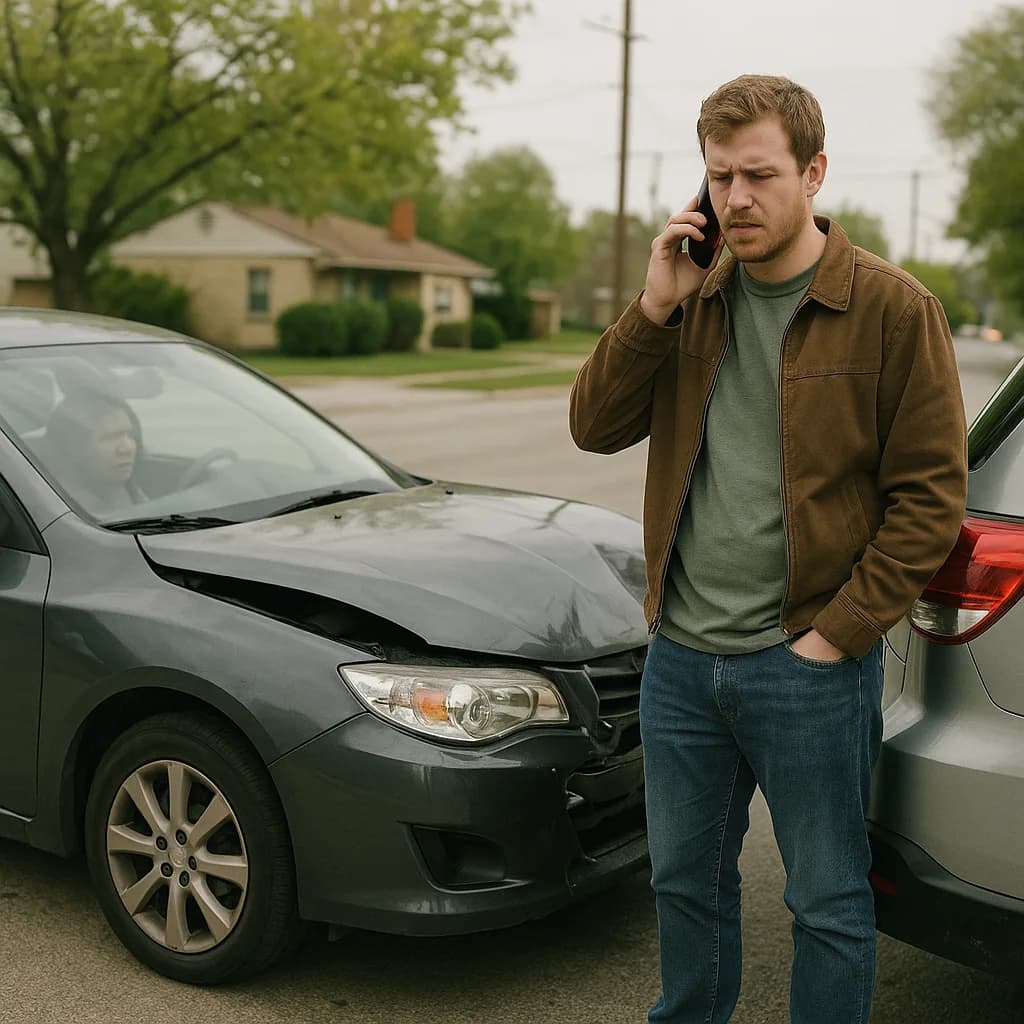
Your non-owner liability policy is primary for injuries and property damage you cause to others. If you rear-end another car in the rental and injure the driver, your non-owner policy pays their medical bills and repairs their car up to your liability limits. The rental agency's policy does not pay this—it protects the agency, not third parties you injure. Your credit card's collision waiver does not pay it either—credit-card coverage is vehicle damage only, never liability.
The rental agency's collision-damage waiver (CDW) covers physical damage to the rental car itself. If you buy the CDW at the counter, the agency waives their right to bill you for repairs or total loss. If you decline the CDW, you are liable for the damage. Your credit card's collision benefit is secondary: it pays the rental agency's damage bill only if you charged the rental to that card, declined the agency's CDW, and the card's terms cover the rental period and vehicle type. Your non-owner policy pays nothing toward the rental car's repair—it is liability-only.
Related Articles


When a Non-Owner Policy Makes Sense for Renters
A non-owner policy makes sense if you rent cars frequently and want primary liability protection that does not depend on the rental agency's policy or your credit card's secondary coverage. Frequent business travelers, people between owned vehicles, and drivers who rely on car-sharing or borrowed vehicles are the core buyers. The policy costs less than a standard auto policy because it covers no owned vehicle—national non-owner rates typically range from $37 to $46 per month, compared to $61 to $120 per month for standard liability coverage.
The policy also makes sense if you need continuous coverage to avoid a lapse. Insurance companies and state regulators track coverage gaps. A lapse of more than 30 days can raise your future rates by 8% to 35%, depending on the state and the length of the gap. If you sold your car but plan to buy another within six months, a non-owner policy keeps your coverage continuous and avoids the lapse penalty.
The policy does not make sense if you rent cars rarely—once or twice a year—and your credit card already provides collision coverage. In that case, buying the rental agency's liability coverage at the counter for the few days you rent is cheaper than paying a non-owner premium year-round. The break-even point is typically three to four rental days per month. If you rent more often than that, the non-owner policy costs less than buying daily rental coverage.
National Non-Owner Premium Range
$37–$46/mo
Non-owner policies cost less than standard auto coverage because they insure no vehicle and carry liability-only. Rates vary by state minimum liability limits, your driving record, and the coverage limits you select. High-risk drivers—those with a DUI, suspended license, or SR-22 filing requirement—pay higher premiums.
MoneyGeek, Insurify, Insure.com non-owner rate studies, 2026
State-Specific Rules and Carrier Availability
State minimum liability limits determine the floor your non-owner policy must meet. Bodily-injury minimums range from $15,000 per person in some states to $50,000 in others. Property-damage minimums range from $5,000 to $50,000. If you rent in a state with higher minimums than your home state, your policy must meet the higher floor while you drive there. Most non-owner policies automatically extend to match the rental state's minimum, but confirm this with your carrier before you travel.
Carrier availability varies by state. Geico and Progressive write non-owner policies in all 51 jurisdictions. The General writes non-owner in 45 states. Dairyland writes in 38. GAINSCO writes in 22. USAA writes non-owner in all 51 but restricts eligibility to military-affiliated drivers. State Farm writes non-owner in only one jurisdiction—never assume State Farm will write a non-owner policy without confirming your state. If you need an SR-22 filing—a certificate of financial responsibility required after certain violations—the carrier pool narrows further. Only 21 of the 34 national carriers write both non-owner policies and file SR-22 certificates.
Compare Carriers That Write Non-Owner Policies
Request quotes from at least three carriers that write non-owner coverage in your state. Rates vary by carrier, and the lowest-cost option for a standard driver is not always the lowest for a non-owner buyer. Provide your state, your driving record, and the liability limits you want. Ask whether the policy includes uninsured-motorist coverage and whether it extends to rental cars in all states. If you need an SR-22 filing, confirm the carrier files SR-22 for non-owner policies in your state—not all non-owner writers file SR-22, and choosing wrong means restarting the process when the state rejects your proof.