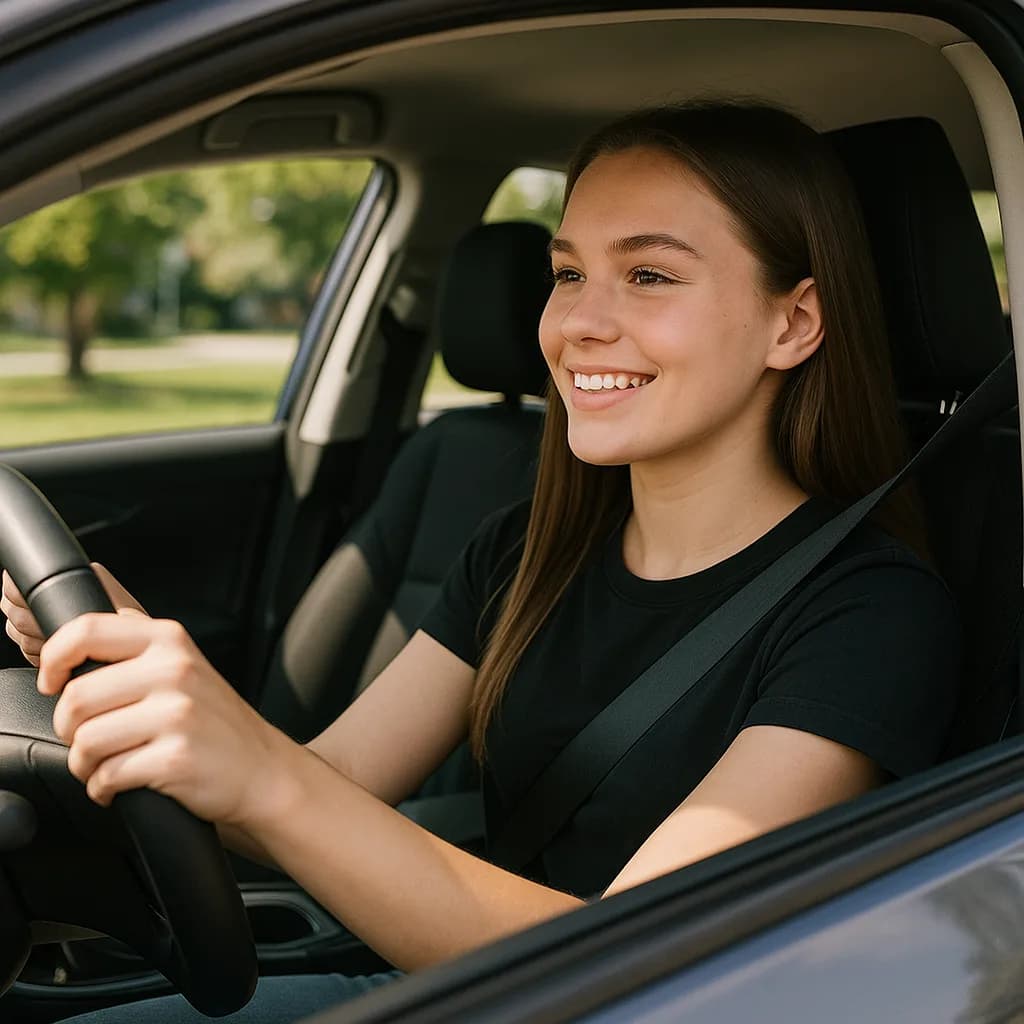
Why New Drivers Buy Non-Owner Policies
You passed your driving test but don't own a car. You're borrowing a household member's vehicle, driving a car-share, or planning to buy in six months—and you need liability coverage that follows you, not the car. A non-owner policy gives you bodily-injury and property-damage liability without requiring you to list an owned vehicle on the application.
New drivers reach non-owner policies from three situations: driving borrowed cars regularly and wanting your own liability protection, maintaining continuous coverage to avoid a lapse penalty before buying your first car, or satisfying a state requirement that mandates proof of insurance even when you don't own a vehicle. The policy is liability-only by design—it never covers physical damage to the car you're driving, because you own no vehicle to repair.
Get non-owner SR-22 coverage without owning a vehicle
Compare carriers that offer non-owner policies with SR-22 filing — required for reinstatement in most states.
Get Your Free QuoteNational Non-Owner Premium Range
$37–$46/mo
Non-owner policies cost less than standard auto insurance because they carry no collision or comprehensive coverage. New drivers typically pay toward the higher end of this range due to limited driving history.
MoneyGeek, Insurify, Insure.com 2026 non-owner rate analysis
What Non-Owner Coverage Actually Protects
A non-owner policy is secondary coverage. It sits behind any insurance on the car you're driving. If you borrow a friend's car and cause an accident, their policy pays first—your non-owner policy covers the gap if their limits are exhausted or if they have no coverage at all.
The policy includes bodily-injury liability (pays medical costs for people you injure), property-damage liability (pays repair costs for vehicles or property you damage), and usually uninsured-motorist coverage (protects you if an uninsured driver hits you). It does not include collision, comprehensive, or any physical-damage coverage for the car you're driving. If you wreck a borrowed car, your non-owner policy will not pay to fix it.
State minimum liability limits apply. Most states require $25,000 bodily injury per person, $50,000 per accident, and $25,000 property damage—but minimums range from $15,000 to $50,000 per person depending on the state. Your non-owner policy must carry at least your state's minimum to satisfy legal requirements.
Most non-owner carriers require 12 months of continuous licensed driving history. Newly licensed drivers face a narrower acceptance pool.
Carrier Acceptance for New Drivers

Nationally, 17 carriers write non-owner policies. Of those 17, only 6 accept applicants with under 12 months of licensed driving history: Progressive, Geico, Dairyland, The General, GAINSCO, and Direct Auto. State Farm writes non-owner policies in only one state and is not a national option. USAA writes non-owner in all 51 jurisdictions but restricts eligibility to military-affiliated drivers.
The carriers that do accept new drivers price the policy higher than they would for an experienced driver with a clean record. Limited driving history is a rating factor—you're statistically more likely to file a claim in your first year of driving than someone with five years of experience. Expect quotes toward the upper end of the $37–$46/month national range, and higher still if you live in a high-cost state or carry elevated liability limits.
Related Articles

State-Specific Quirks That Block New Drivers
Some states require proof of prior insurance before issuing a non-owner policy. If you've never been insured, carriers in those states may decline the application or require a letter from your state's Department of Motor Vehicles confirming you were not required to carry coverage as an unlicensed driver. This is common in no-fault states where continuous coverage is tracked electronically.
Other states tie non-owner eligibility to household vehicle ownership. If you live with a parent or roommate who owns a car, some carriers require you to be listed as an excluded driver on that household policy before they'll write you a non-owner policy. The logic: if you have regular access to a household vehicle, you should be covered on that vehicle's policy, not through a separate non-owner policy. Failing to disclose household vehicles can void your coverage if you file a claim.
Filing requirements complicate acceptance further. If your state requires an SR-22 certificate—common after a DUI, uninsured-driving conviction, or license suspension—the carrier pool shrinks. Only 21 of 34 carriers writing SR-22 also write non-owner policies, and fewer still accept newly licensed drivers. FR-44 exists only in Florida and Virginia and carries elevated liability minimums ($100,000/$300,000/$50,000 in Florida); new drivers in those states face the smallest acceptance pool.
National Non-Owner Writers Accepting New Drivers
6 carriers
Of 17 carriers writing non-owner policies nationally, only 6 accept applicants with under 12 months of licensed driving history. State-level availability varies—some states have as few as 3 carriers willing to write new-driver non-owner policies.
Carrier underwriting guidelines verified 2026
How to Apply Without Owned-Vehicle Data
The application asks for vehicle information because most auto policies insure a car. When you apply for a non-owner policy, you skip that section—but some online quote forms don't allow blank vehicle fields, which blocks submission. Call the carrier directly or work with an independent agent who can override the form and submit a non-owner application manually.
You'll need your driver's license number, your Social Security number for the credit check, and proof of your licensed-driver date. If you've been licensed for under 30 days, some carriers require a copy of your license or a DMV printout showing your issue date. If your state requires an SR-22 or FR-44, bring the court order or DMV notice that specifies the filing requirement and the duration—the carrier files the certificate on your behalf once the policy is active.
What Happens When You Buy a Car
A non-owner policy terminates the day you register a vehicle in your name. You cannot insure an owned car under a non-owner policy—the policy exists specifically for drivers who own no vehicle. When you buy a car, you must switch to a standard auto policy that lists the vehicle and includes collision and comprehensive coverage if you financed the purchase.
Most carriers allow you to convert your non-owner policy to a standard policy without reapplying. Your liability limits, payment history, and claims record transfer to the new policy, and you avoid a coverage gap. If you're carrying an SR-22 or FR-44 on the non-owner policy, the carrier continues filing the certificate under the new policy—but only if you notify them before the vehicle purchase. Failing to notify the carrier can lapse the filing and restart your filing clock.
If you don't plan to buy a car for six months or longer, a non-owner policy keeps you continuously insured. Continuous coverage matters: a lapse of more than 30 days raises your future rates, and some states impose reinstatement fees or require proof of insurance for a set period before lifting a suspension. Staying covered now avoids those penalties later.