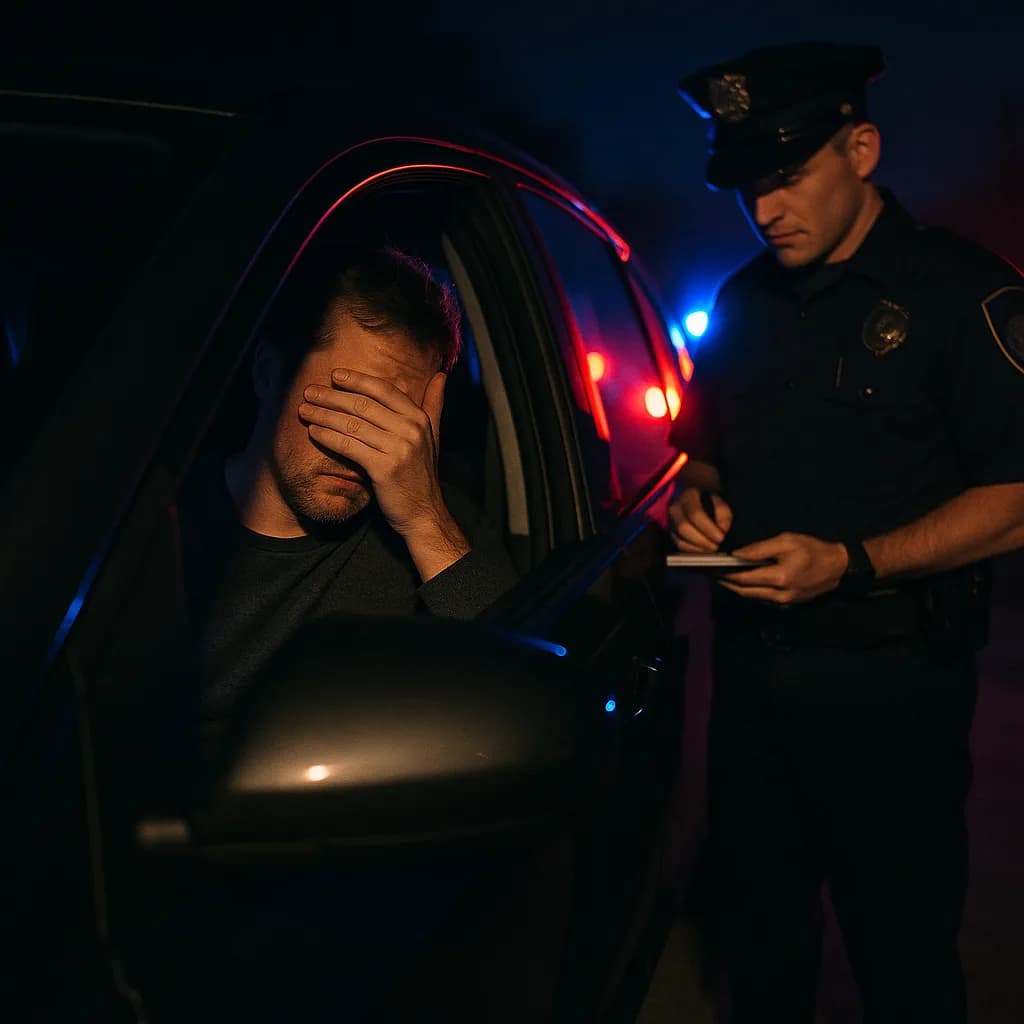
Why Most Carriers Won't Quote You
You called three carriers for non-owner insurance in Texas and two refused to quote you at all, while the third quoted a policy but said they don't file SR-22 certificates. This is the single most common procedural failure non-owner buyers hit: carriers advertise non-owner coverage on their websites, but when you disclose the DWI or the uninsured-driving suspension that triggered your SR-22 requirement, they decline to write the policy or tell you they don't file certificates for non-owner policies. The carrier roster that writes non-owner coverage in Texas is already narrow—12 carriers out of the full licensed roster—and the subset that also files SR-22 certificates for non-owner policies shrinks to 7.
Texas requires SR-22 filing for 2 years after a DWI conviction or an uninsured-driving violation, measured from the date you file the certificate with the Department of Public Safety, not the conviction date. A lapse during those 2 years resets the clock to zero and reports the gap to DPS, which suspends your license again. You need a carrier that writes non-owner policies, files SR-22 certificates, and accepts drivers with your violation type—all three conditions must be true or the policy won't satisfy the court order.
Get non-owner SR-22 coverage without owning a vehicle
Compare carriers that offer non-owner policies with SR-22 filing — required for reinstatement in most states.
Get Your Free QuoteTexas SR-22 Filing Period
2 years
Texas Transportation Code §601.153 requires SR-22 financial responsibility filing for 2 years from the date the certificate is filed with DPS for most DWI and uninsured-driving suspensions. A coverage lapse during this period resets the 2-year clock and triggers a new suspension.
Texas Transportation Code §601.153
What a Non-Owner Policy Actually Covers in Texas
A non-owner policy in Texas is liability-only by design: it carries bodily-injury and property-damage liability at or above the state minimum ($30,000 per person, $60,000 per accident, $25,000 property damage), and usually uninsured/underinsured motorist coverage. It never includes collision or comprehensive coverage because you own no vehicle to repair. The policy is secondary coverage that sits behind any insurance on the car you're actually driving—if you borrow a household member's car and cause an accident, their policy pays first up to its limits, and your non-owner policy covers the remainder if damages exceed those limits.
Most non-owner buyers in Texas fall into one of three situations: you're filing an SR-22 after a DWI or uninsured-driving suspension and don't own a car to insure, you sold your vehicle and want continuous coverage to avoid a lapse penalty before buying again, or you regularly drive borrowed, rented, or car-share vehicles and want liability protection that follows you rather than the car. The SR-22 compliance case is the largest segment, and it's where carrier availability narrows sharply—carriers that write standard non-owner policies for the continuity or borrower cases often refuse to write for drivers with DWI or uninsured violations.
The non-owner policy does not cover physical damage to any vehicle you drive. If you wreck a borrowed car, your non-owner policy pays for injuries and property damage you cause to others, but the car owner's collision coverage (or the owner's own funds) pays to repair the borrowed car. This is the second most common misconception after assuming you need to own a car to file an SR-22: non-owner coverage is not full coverage, and it will never pay to fix the car you were driving.
Seven carriers write non-owner policies and file SR-22 certificates in Texas. The other five write non-owner coverage but won't file your certificate or won't accept DWI or uninsured violations.
The Seven Carriers That File Non-Owner SR-22 in Texas
Geico writes non-owner policies in all 51 U.S. jurisdictions and files SR-22 certificates for non-owner policies in Texas. Geico is a standard-tier carrier with an AM Best A++ rating and offers online quoting. Progressive also writes non-owner coverage nationwide and files SR-22 certificates in Texas; Progressive is standard-tier, AM Best A+, and quotes online. The General is a non-standard carrier (AM Best rating not disclosed) that writes non-owner policies and files SR-22 in 45 states including Texas; The General specializes in high-risk drivers and quotes online. Dairyland writes non-owner SR-22 policies in 38 states including Texas, is non-standard tier, and quotes online.
GAINSCO is a Texas-based non-standard carrier (AM Best A-) that writes non-owner policies and files SR-22 certificates; GAINSCO quotes online and operates primarily in the Southwest. USAA writes non-owner policies in all 51 jurisdictions and files SR-22 in Texas, but eligibility is restricted to military members, veterans, and their families; USAA is preferred-tier with an AM Best A++ rating. State Farm writes non-owner policies in only one U.S. state and does file SR-22 in Texas, but availability is extremely limited and State Farm does not advertise non-owner coverage prominently—most Texas non-owner buyers will not qualify for a State Farm quote.
Related Articles


Why Five Other Carriers Won't File Your Certificate
Five additional carriers write non-owner policies in Texas but are flagged in state records as not filing SR-22 certificates for non-owner policies, or not accepting drivers with DWI or uninsured violations: Allstate, Farmers, Liberty Mutual, Nationwide, and Travelers. These carriers may quote you a non-owner policy if you're between cars or a regular borrower with a clean record, but they will decline to file an SR-22 certificate or refuse to write the policy at all once you disclose the violation. This is not a coverage gap you can fix by calling back—it's a hard underwriting rule at each carrier.
The procedural failure happens at quote time: you request a non-owner policy online or by phone, the system quotes you a rate, and then you mention the SR-22 requirement or the DWI conviction. The carrier either declines the application immediately or tells you they write non-owner policies but don't file SR-22 certificates for them, leaving you with no policy and no filing. Some carriers will write a standard non-owner policy for you if you don't need an SR-22, but the moment you need the certificate filed, they exit the conversation.
Texas DPS does not maintain a public list of carriers that file SR-22 certificates for non-owner policies. The only way to verify a carrier will file your certificate is to ask directly during the quote process, or to compare only the seven carriers verified above. Calling a carrier not on this list wastes time—you'll either be declined or quoted a policy that won't satisfy your court order.
Texas Minimum Liability Limits
$30,000 / $60,000 / $25,000
Texas requires minimum liability coverage of $30,000 per person for bodily injury, $60,000 per accident for bodily injury, and $25,000 for property damage. A non-owner policy must carry at least these limits to satisfy state law and file an SR-22 certificate with DPS.
Texas Transportation Code Chapter 601
What Happens If You Buy the Wrong Policy
If you buy a non-owner policy from a carrier that doesn't file SR-22 certificates, Texas DPS never receives your certificate and your license remains suspended. The court order or the DPS reinstatement notice requires proof of SR-22 filing—your insurance card is not proof, and the carrier's confirmation that you bought a policy is not proof. DPS must receive the SR-22 certificate electronically from the carrier, and if the carrier doesn't file certificates for non-owner policies, that transmission never happens. You've paid for a policy that does nothing to satisfy your legal requirement.
The second failure mode: you buy a non-owner policy from one of the seven carriers that files SR-22 certificates, but you let the policy lapse before the 2-year filing period ends. Texas resets your SR-22 clock to zero the day the lapse is reported, and DPS suspends your license again. You must then pay a new reinstatement fee (typically $125 for most suspension types, though county court fees and surcharges may apply), refile the SR-22 with a new carrier, and restart the 2-year period from the new filing date. A single missed payment or a carrier cancellation for non-payment costs you months of progress and hundreds of dollars in fees.
Compare the Seven Carriers That File Your Certificate
Start by requesting quotes from Geico, Progressive, The General, Dairyland, and GAINSCO—these five write non-owner SR-22 policies in Texas, accept drivers with DWI and uninsured violations, and quote online. Disclose your violation type and your SR-22 requirement up front during the quote process so the carrier can confirm they'll file the certificate before you pay. USAA is an option if you're military-affiliated; State Farm writes non-owner policies in only one state and availability in Texas is extremely limited, so don't rely on State Farm as a primary option.
When comparing quotes, verify three things: the carrier writes non-owner policies in Texas, the carrier files SR-22 certificates for non-owner policies, and the carrier accepts your specific violation type (DWI, uninsured driving, or other). All three must be true or the policy won't satisfy your court order. Ask each carrier how long after purchase the SR-22 certificate is filed with DPS—most file within 1 to 3 business days, but some take up to 5 business days, and if you're working against a court deadline that timing matters.