The Suspended-License Non-Owner Insurance Gap
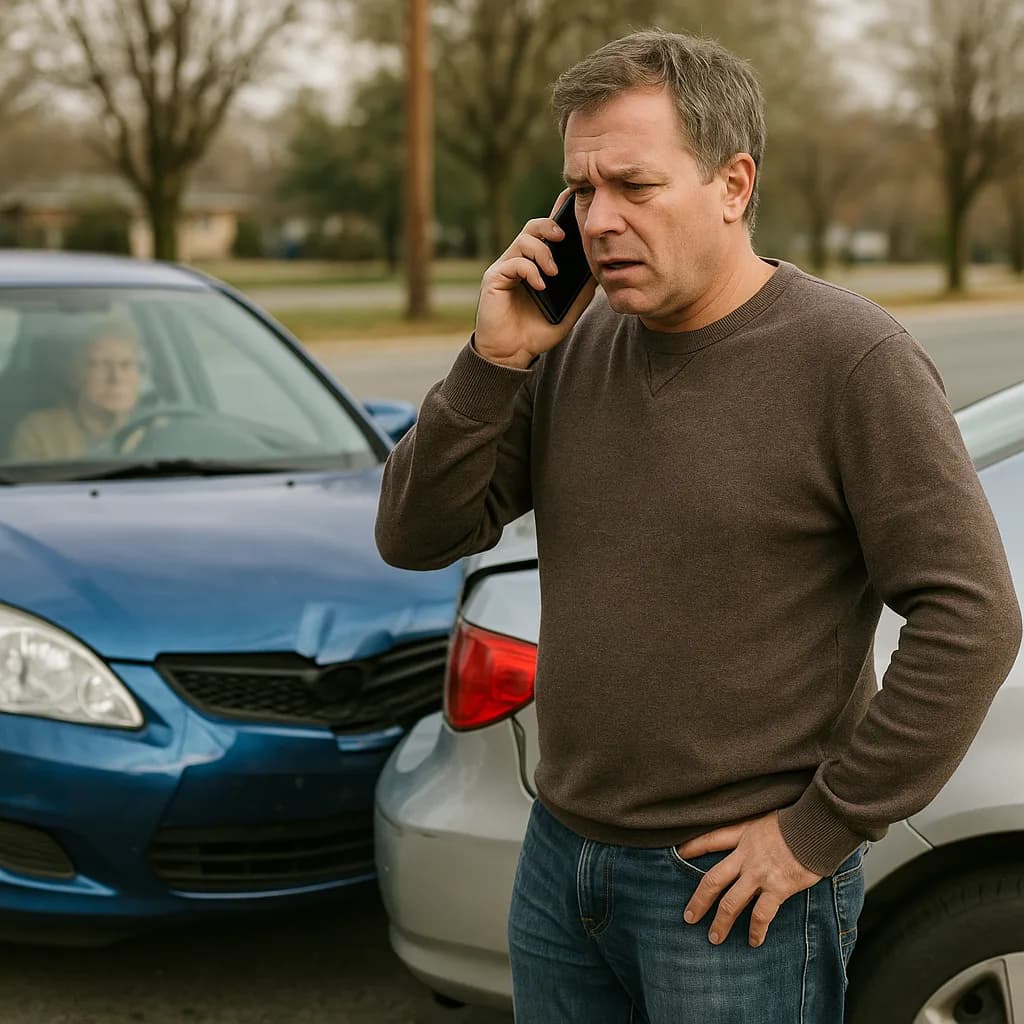
Your license is suspended, you do not own a car, and your state or court requires you to carry liability insurance before you can apply for reinstatement. You search for non-owner car insurance—a liability-only policy designed for drivers without vehicles—and discover most carriers will not quote you. The suspension itself blocks the application, even though you are trying to satisfy the exact requirement the state imposed to lift it.
This is not a credit problem or a coverage misunderstanding. It is a carrier underwriting rule: most insurers categorically decline to write any policy—owner or non-owner—for a driver with an active suspension on record. The handful that do write suspended-license non-owner policies become your only path forward, and knowing which carriers accept this combination before you apply determines whether you satisfy your reinstatement requirement in days or spend weeks restarting applications with carriers that cannot help you.
Get non-owner SR-22 coverage without owning a vehicle
Compare carriers that offer non-owner policies with SR-22 filing — required for reinstatement in most states.
Get Your Free QuoteNational Non-Owner Suspended-License Writers
5–7 carriers
Across all 51 jurisdictions, only five to seven insurers consistently write non-owner policies for drivers with active suspensions: Progressive, The General, Dairyland, GAINSCO, and in some states Direct Auto, Bristol West, and National General. Geico writes non-owner in all states but declines most suspended applicants.
Verified carrier underwriting guidelines, 2026
What a Non-Owner Policy Does During Suspension
A non-owner car insurance policy is liability-only coverage that follows you, not a vehicle. It pays bodily-injury and property-damage claims when you drive a car you do not own—a borrowed car, a rental, or a car-share vehicle—and the accident is your fault. It also carries uninsured-motorist coverage in most states. It never includes collision or comprehensive, because there is no owned vehicle to repair.
During an active suspension, the policy does not restore your driving privileges. You cannot legally drive until the state reinstates your license. What the policy does is satisfy the continuous-coverage or financial-responsibility requirement many states impose as a condition of reinstatement. The state wants proof you will carry liability insurance the moment your license is valid again, and a non-owner policy provides that proof without requiring you to own a car.
The policy is secondary coverage. If the car you drive already has liability insurance, that policy pays first. Your non-owner policy pays only when the car's coverage is exhausted or absent. This structure keeps non-owner premiums lower than standard owner policies, but it also means the policy will not cover physical damage to any vehicle you drive.
Most carriers decline all suspended-license applicants regardless of policy type. The non-owner structure does not bypass the suspension underwriting rule—you need a carrier that accepts both.
Which Carriers Write Suspended-License Non-Owner Policies
Progressive writes non-owner policies in all 51 jurisdictions and accepts many suspended-license applicants, particularly when the suspension stems from a lapse, unpaid tickets, or a DUI with reinstatement conditions already met. Progressive files SR-22 in all states that require it and FR-44 in Florida and Virginia. The General operates in 45 states and specializes in high-risk and non-standard drivers, including those with active suspensions. The General writes non-owner policies and files SR-22 certificates in most of its operating states. Dairyland writes non-owner coverage in 38 states and accepts suspended-license applicants in many of them, particularly for DUI-related suspensions where the driver is working through reinstatement steps.
GAINSCO operates in 22 states and writes non-owner policies for suspended drivers in most of its footprint, with a focus on DUI and lapse-related suspensions. Direct Auto, Bristol West, and National General write non-owner policies in select states and accept some suspended applicants, but availability varies significantly by state and suspension cause. Geico writes non-owner policies in all 51 jurisdictions but declines most suspended-license applicants during the active suspension period, making it a poor first-choice carrier for this situation. State Farm writes non-owner policies in only one state and is not a viable national option.
Related Articles



State-Specific Filing and Reinstatement Rules
Reinstatement requirements vary by state and by the cause of suspension. In 36 states, certain violations—typically DUI, reckless driving, driving without insurance, or accumulating excessive points—trigger an SR-22 filing requirement. The SR-22 is a certificate your insurer files with the state proving you carry at least the state minimum liability coverage. The filing period ranges from six months to five years depending on state and violation; three years is the most common.
Florida and Virginia use an FR-44 certificate instead of an SR-22 for DUI and certain serious violations. An FR-44 requires higher liability limits than the state minimum—100/300/50 in Florida, 100/200/50 in Virginia—and the filing period is three years in both states. Your non-owner policy must carry these elevated limits for the insurer to file the FR-44.
In 33 of the 36 SR-22 states, a coverage lapse resets the filing clock. If your policy cancels for non-payment or you let it lapse before the filing period ends, the state records the lapse and you start the entire filing period over from the date you reinstate coverage. This rule applies to non-owner policies just as it does to standard owner policies. The carrier that writes your non-owner policy must file the SR-22 or FR-44 electronically with your state's DMV or licensing agency, and the state will not process your reinstatement application until the filing is on record.
States that do not require SR-22 filings—including Delaware, Kentucky, Maryland, Michigan, Minnesota, New Jersey, New York, North Carolina, Pennsylvania, and Wisconsin—still require proof of continuous liability coverage as a reinstatement condition. Your non-owner policy satisfies this requirement, but there is no certificate to file. You provide the policy declarations page or an insurance ID card directly to the DMV when you apply for reinstatement.
Most Common SR-22 Filing Period
3 years
Three years is the most common SR-22 filing period across the 36 states that require it, measured from the date the insurer files the certificate—not the conviction date or suspension start date. In 33 of those states, a lapse resets the clock and you restart the full period.
State DMV filing requirements, 2026
Application Process and Timeline
Start by identifying which of the five to seven suspended-license non-owner carriers operate in your state. Not all of them write in every jurisdiction, and not all file SR-22 or FR-44 where required. Progressive, The General, and Dairyland have the widest state footprints and the most consistent suspended-license acceptance. Request quotes from at least three carriers that operate in your state and confirm each one writes non-owner policies, accepts suspended-license applicants, and files the certificate your state requires.
When you apply, the carrier will ask for your license number, the suspension cause, the suspension start and end dates, and whether you have satisfied any court-ordered conditions such as DUI school, community service, or ignition-interlock installation. Some carriers decline applicants whose suspensions stem from multiple violations or who have not yet completed court-ordered programs. Others accept these applicants but price the policy higher. Be prepared to provide documentation: a copy of the suspension notice, proof of completed programs, and a court order if your reinstatement is conditional.
Once the carrier approves your application and you pay the first premium, the insurer files the SR-22 or FR-44 electronically with your state within one to three business days. Most states process the filing within 24 to 48 hours and update your driving record to show continuous coverage on file. You can then apply for reinstatement through your state's DMV, pay any reinstatement fees the state imposes, and—if all other conditions are met—receive a valid license. The entire process from application to reinstatement typically takes one to two weeks if you apply with a carrier that writes your situation and file all required documentation correctly the first time.
What Happens After Reinstatement
Your non-owner policy remains in force after your license is reinstated, and you must keep it active for the full SR-22 or FR-44 filing period your state requires. If you cancel the policy or let it lapse before the filing period ends, the insurer notifies the state electronically within 24 hours, the state records the lapse, and your license may be suspended again. In 33 of the 36 SR-22 states, the lapse also resets your filing clock—you restart the entire three-year or five-year period from the date you reinstate coverage.
If you buy a car during the filing period, contact your insurer immediately. Most carriers that write non-owner policies will convert your coverage to a standard owner policy and transfer the SR-22 or FR-44 filing to the new policy without interruption. A few carriers do not write standard owner policies and will cancel your non-owner policy the day you register a vehicle, which triggers a lapse and resets your filing clock. Before you buy a car, confirm your carrier will convert the policy or be prepared to switch to a carrier that writes both non-owner and owner policies and can transfer your filing seamlessly.
Compare Carriers That Write Your Situation
The carrier you choose determines whether you satisfy your reinstatement requirement in days or spend weeks restarting applications with insurers that cannot write your situation. Use a comparison tool that filters for non-owner policies, suspended-license acceptance, and SR-22 or FR-44 filing capability in your state. Request quotes from Progressive, The General, and Dairyland first—they have the widest acceptance and the most consistent filing processes. Confirm each quote includes the state minimum liability limits your reinstatement requires, or the elevated FR-44 limits if you are in Florida or Virginia, and verify the carrier will file the certificate electronically with your state's DMV before you pay the first premium.